UNR Wolf Pack Relations Social Media Campaign
Overview
As the Graphic Designer for Wolf Pack Relations, a student-led communications team at the University of Nevada, Reno, I collaborated with Reynolds School of Journalism students, faculty, and community partners to develop and launch #DoItFor2021, a social media campaign encouraging safer behavior during the COVID-19 outbreak. The initiative responded to rising case numbers and ongoing large gatherings on and around campus, aiming to reframe public health messaging in a way that resonated with students.
Campaign Goals
- Encourage safer behavior among UNR students, including mask-wearing, social distancing, and responsible decision-making
- Reframe COVID-19 messaging to feel relatable and motivating, reducing fatigue around public health guidelines
- Increase awareness of rising case numbers through accessible, student-centered content
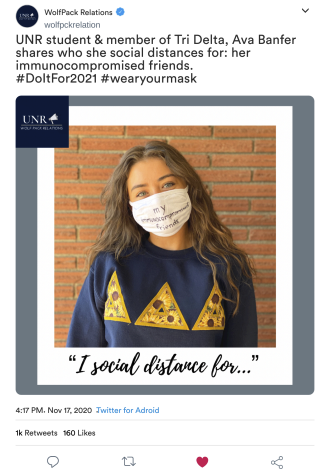
- Leverage peer influence by featuring real students in campaign visuals
- Support the City of Reno’s public health efforts through clear, compelling social media graphics
1. Research & Audience Understanding
To ground the campaign in student reality, I reviewed campus COVID-19 data, student sentiment surveys, and insights from faculty partners.
This research helped identify barriers to safe behavior and informed messaging that balanced urgency with empathy and relatability.
2. Campaign Concept Development
I collaborated with the Wolf Pack Relations team, faculty advisors, and the Gattuso Coalition to shape the #DoItFor2021 concept.
The campaign focused on motivating students to protect their future by making safer choices in the present, emphasizing community care and shared responsibility rather than fear-based messaging.
3. Visual Identity & Graphic Design
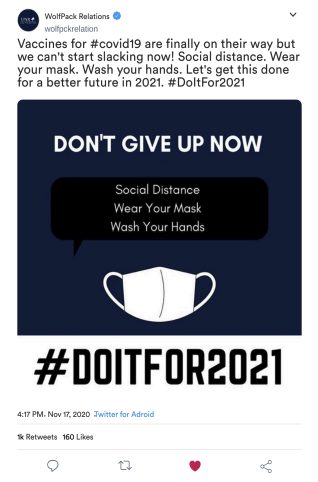
I designed a cohesive set of campaign visuals and social templates that felt lighthearted, recognizable, and relatable to UNR students.
The visual system reinforced public health guidance in a clear, accessible way while maintaining a tone that encouraged participation rather than resistance.


4. Content Creation & Cross-Platform Execution
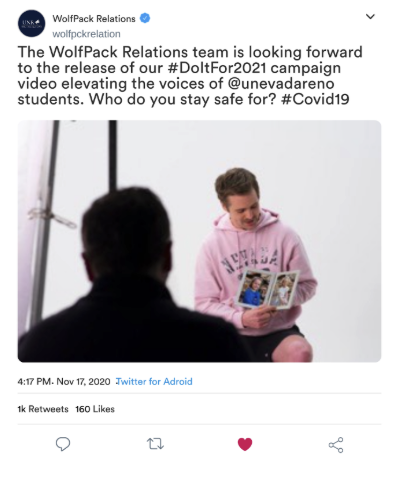
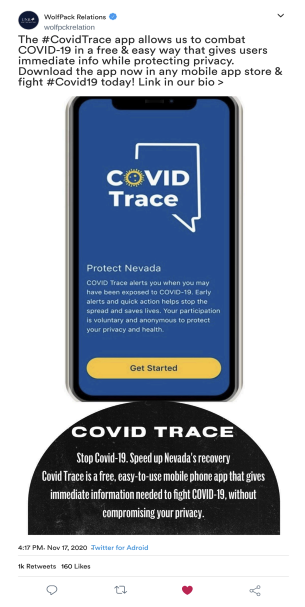
I created a unified library of static graphics and motion assets designed to be shareable across student-facing platforms, while also supporting campaign rollout on Instagram and coordinating with the City of Reno to extend reach through sponsored distribution and student testimonial content.
6. Collaboration & Iteration
Throughout the campaign, I worked closely with teammates, faculty, and city partners to refine messaging based on real-time feedback.
This ongoing collaboration ensured the content remained relevant and responsive as campus conditions and case numbers evolved.
Outcomes
- Increased campaign reach by 45% across Instagram within the first month
- Boosted post engagement by 60% through consistent visuals and student-centered storytelling
- Achieved a 35% increase in shares and saves, indicating a stronger peer-to-peer spread
- Increased video views by 50% on student testimonial content distributed by the City of Reno
- Drove over 1,000 student interactions through polls, contests, and interactive story formats
- Improved message recall, with surveys showing a 25% increase in awareness of safe COVID-19 behaviors
- Supported a 20% increase in self-reported compliance behaviors
Impact
The #DoItFor2021 campaign strengthened health communication efforts during a critical moment in the pandemic by elevating student voices and reframing safety as an act of community care. By shifting the tone away from fatigue and skepticism, the campaign helped foster responsibility, connection, and hope for a return to normal campus life.